
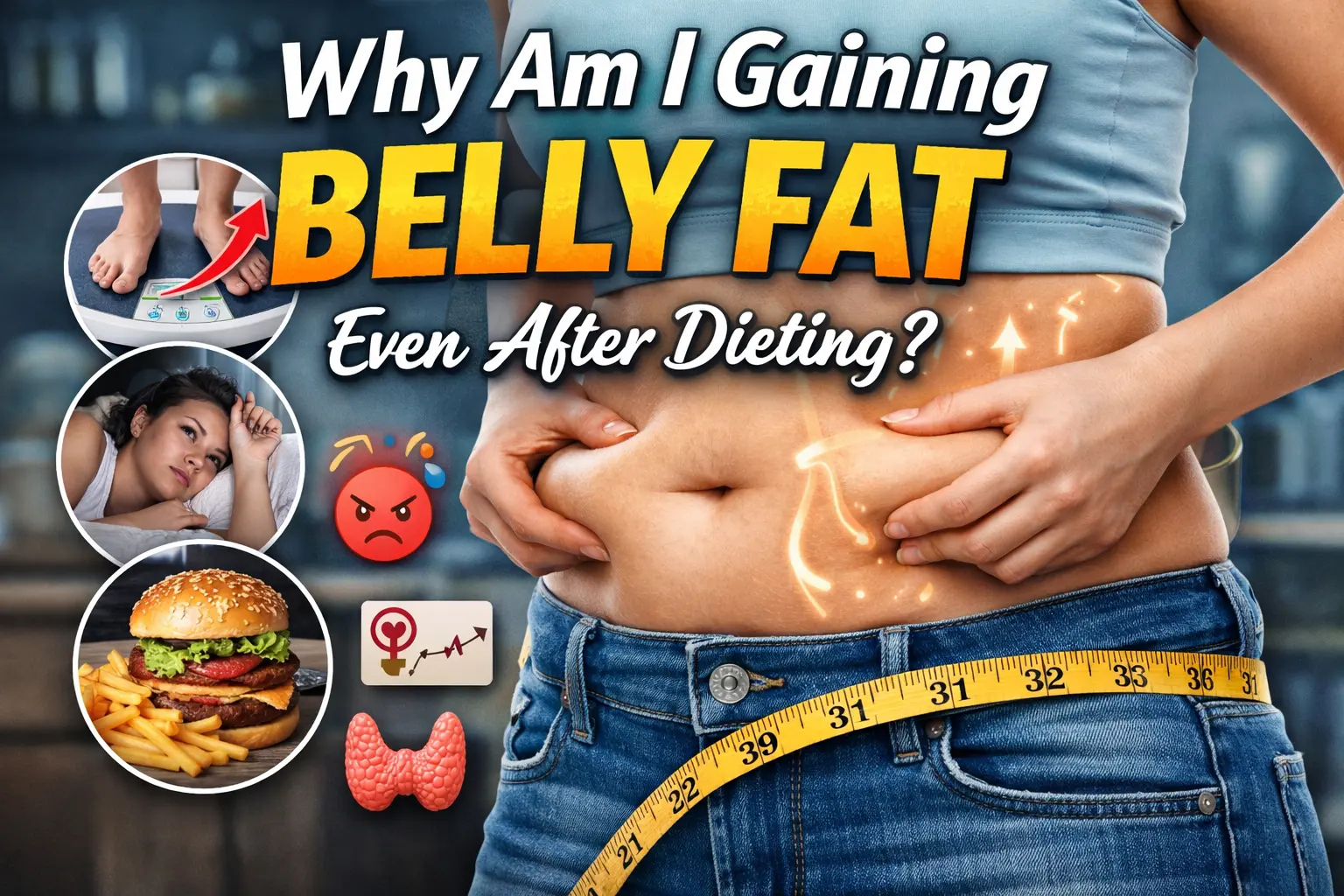
You’ve been cutting calories, eating “healthy,” and avoiding sweets, yet your belly seems to keep growing. Frustrating, right? You’re not alone — many women and men face this issue. Belly fat, especially around the midsection, is stubborn because it’s influenced by hormones, stress, lifestyle, and diet quality, not just calories.
Let’s dive into why belly fat can persist even when dieting and what you can do about it.
1. You Might Be Eating “Healthy” But Overeating Calories
It’s easy to assume that eating salad, smoothies, or “low-fat” snacks automatically leads to fat loss. But calories still matter.
- Example: A smoothie with banana, peanut butter, and almond milk might seem healthy but can have 400–500 calories.
- Even whole-grain toast with avocado can add up if portions aren’t controlled.
Tip: Track calories for a week using an app. Sometimes portion size is the hidden culprit.
Helpful Tool for Portion Control
If you’re unsure about portion sizes, using a digital food scale or portion-control containers can be extremely helpful. These tools make it easier to track calories accurately and avoid accidental overeating, even with healthy foods.
2. High Stress Levels Can Increase Belly Fat
Stress releases a hormone called cortisol, which signals your body to store fat around your belly. Even if you’re eating healthy, high stress can sabotage fat loss.
Common causes:
- Work pressure
- Lack of sleep
- Family or personal stress
Solution:
- Practice 10–20 minutes of meditation or deep breathing daily
- Try yoga or light stretching
- Prioritize sleep (7–8 hours per night)
Recommended Support for Stress Management
Chronic stress can make belly fat stubborn. Many people find relief by combining relaxation techniques with natural stress-support supplements like magnesium or adaptogenic herbs.
3. Hormonal Imbalances
For women, hormones like estrogen, progesterone, and insulin influence belly fat. Some factors that make it harder to lose belly fat include:
- Menopause / Perimenopause – Estrogen decline shifts fat storage to the belly
- PCOS (Polycystic Ovary Syndrome) – Can cause insulin resistance and abdominal fat
- Thyroid issues – Hypothyroidism slows metabolism, making it easier to gain fat
Tip: If belly fat persists despite proper diet and exercise, consult a doctor to check hormone levels.
Hormone Support Options
If hormonal imbalance is contributing to belly fat, some women benefit from doctor-approved hormone-support supplements like Hormone balance supplements (for women) ,Inositol (for PCOS), Thyroid support supplements designed to improve insulin sensitivity and metabolic balance.
Disclaimer : Always consult a healthcare professional before starting any supplement.
4. Diet Quality Matters More Than Calories Alone
Not all calories are equal. Eating the wrong types of food can trigger fat storage:
- Refined carbs: White bread, pastries, pasta
- Sugary foods and drinks: Soda, candy, flavored coffee drinks
- Processed foods: Chips, fast food, frozen meals
These foods spike blood sugar and insulin, leading to fat accumulation around the belly, even if overall calories are low.
Solution: Focus on:
- Lean proteins (chicken, fish, eggs, tofu)
- Vegetables and leafy greens
- Whole grains (quinoa, oats, brown rice)
- Healthy fats (avocado, olive oil, nuts)
5. Lack of Strength Training
Many people think cardio alone burns belly fat. But without muscle, metabolism slows, and fat loss stalls.
- Muscle tissue burns more calories at rest than fat.
- Core exercises strengthen abdominal muscles, giving a tighter belly appearance.
Tip: Add 2–3 strength sessions per week:
- Bodyweight exercises: squats, push-ups, planks
- Resistance bands or light weights
Even 10–15 minutes daily can make a difference over time.Simple Home Workout Products
If you don’t have access to a gym, resistance bands or adjustable dumbbells are affordable tools that make strength training easy at home. These help build lean muscle, boost metabolism, and improve belly fat reduction over time.
6. Hidden Sugars and Alcohol
You might think you’re eating clean, but:
- Sauces, condiments, and flavored yogurts often have sugar
- Alcohol slows fat burning and increases appetite
Solution:
- Read labels for hidden sugar
- Limit alcohol to special occasions
- Healthier Sugar Alternatives
- Many people unknowingly consume sugar through sauces and dressings. Switching to low-sugar or sugar-free condiments and natural sweeteners can significantly reduce insulin spikes and support belly fat loss.
7. You Might Be Gaining Water Retention, Not Fat
Sometimes, bloating or belly fullness is not fat but water retention. Causes include:
- High sodium intake
- Hormonal fluctuations (especially before periods)
- Stress
Tip: Reduce processed foods, drink plenty of water, and include potassium-rich foods like bananas and spinach.
8. You Need More Sleep
Sleep deprivation increases ghrelin, the hunger hormone, and decreases leptin, the satiety hormone. This combination:
- Makes you feel hungrier
- Leads to overeating
- Encourages belly fat storage
Tip: Aim for 7–8 hours of quality sleep per night.Sleep Support Products
Poor sleep can disrupt hunger hormones and slow fat loss. Magnesium supplements, blue-light blocking glasses, or sleep masks can help improve sleep quality and support hormonal balance naturally.
9. Not Enough Movement Outside of Meals
Even if you exercise, being sedentary the rest of the day can slow fat loss. This is called NEAT (Non-Exercise Activity Thermogenesis).
- Walking, taking stairs, cleaning, fidgeting — all burn calories
- Sitting all day can stall belly fat loss
Tip: Take short walking breaks, use stairs, and move frequently during the day.
10. Patience and Realistic Expectations
Belly fat is stubborn. Spot reduction doesn’t work — fat is lost from all over the body, and for many women, the belly is the last place to slim down.
- Healthy fat loss is about 0.5–1 kg per week
- Rapid dieting or extreme calorie restriction often backfires, slowing metabolism and causing fat rebound
Tip: Focus on consistent habits — clean eating, movement, stress management, and sleep.
Action Plan to Reduce Belly Fat Despite Dieting
- Check Your Calories and Portions – Track for 5–7 days
- Prioritize Protein and Fiber – Keeps you full and boosts metabolism
- Incorporate Strength Training – 2–3 times per week
- Reduce Refined Sugar & Processed Foods – Focus on whole foods
- Move More During the Day – Walk, stretch, or take stairs
- Manage Stress – Meditation, yoga, or deep breathing
- Sleep Well – 7–8 hours nightly
- Stay Hydrated – 2–3 liters of water daily
- Check Hormones if Needed – Thyroid, estrogen, insulin, or cortisol levels
Recommended Products to Support Belly Fat Loss
While no product can directly burn belly fat, the right tools and supplements can support healthy habits. Below are some helpful options many readers use alongside proper diet, exercise, and lifestyle changes.
- Protein powder
- Stress supplement
- Resistance bands
- Portion control tools
Final Thought
If you’re gaining belly fat despite dieting, it’s rarely your fault. Hormones, stress, sleep, and lifestyle habits play a big role. By combining proper nutrition, movement, stress management, and good sleep, you can start seeing belly fat reduction over time.
Consistency matters more than perfection — small daily improvements add up faster than extreme short-term diets.
Leave a Reply