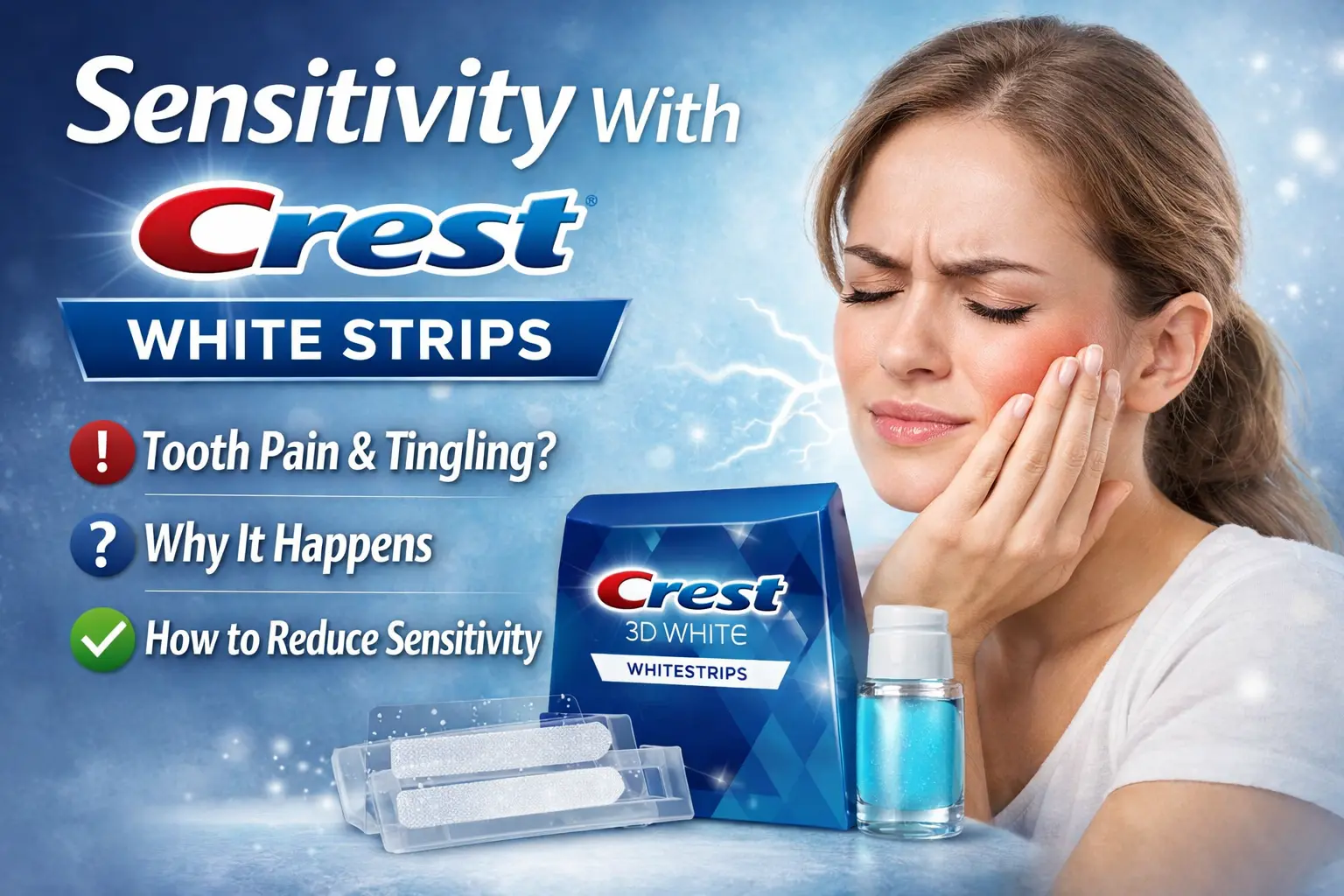
Hey there! So you’re thinking about brightening your smile with Crest White Strips? I completely understand the excitement – there’s something genuinely thrilling about the idea of transforming your teeth shade by shade. Trust me, I’ve been there, standing in front of the mirror with that first strip, imagining my future pearly whites.
But let me be real with you for a moment. Before you dive headfirst into your whitening journey, we need to talk about something that caught me completely off guard during my first attempt: tooth sensitivity. And not just a little tickle – I’m talking about that sharp, shooting pain that makes you second-guess everything when you’re trying to enjoy your morning chai or even breathe in cool air.
I remember it vividly. It was day two of my Crest White Strips adventure, and I was so focused on getting those brilliant whites that I hadn’t really thought about potential side effects. One sip of my beloved hot tea, and suddenly I was wincing like I’d touched a live wire. My teeth felt like they were staging a protest against my whitening ambitions. I called my friend Fatima, who’d mentioned trying the same strips weeks earlier, and guess what? She’d experienced almost the exact same thing. That conversation made me realize I wasn’t losing my mind – this was actually a common experience.
If you’re reading this because you’ve already felt that uncomfortable tingling, sharp pain, or general sensitivity while using whitening strips, take a breath. You’re definitely not alone in this journey, and more importantly, you’re going to get through it just fine.
Throughout this guide, I’ll walk you through everything I’ve learned from both my personal experience and extensive research – from understanding why sensitivity happens in the first place, to realistic expectations about how long it might last, and most crucially, practical, tested methods to keep your teeth comfortable while still achieving that gorgeous white smile you’re after. Think of this as having a heart-to-heart with a friend who’s already walked this path and is here to make sure you don’t have to stumble through it alone.
Why Do Crest White Strips Actually Cause Sensitivity?
Let’s get into the science of what’s actually happening inside your mouth when you apply those white strips. I used to think it was just some random side effect, but understanding the ‘why’ behind it genuinely helped me feel more in control of the situation.
The main culprit? The active whitening ingredients – specifically hydrogen peroxide or carbamide peroxide – that are packed into those strips. These aren’t gentle substances; they’re powerful chemical agents designed to do serious work on your teeth.
Here’s what actually happens, and I’ll break it down in a way that makes sense: these peroxide compounds are specifically formulated to penetrate through your enamel – that’s the hard, protective outer layer covering your teeth – so they can break down those stubborn stains that are trapped deeper inside. Think of it as a chemical-level deep cleaning that goes way beyond what your toothbrush can accomplish. When this penetration happens, here’s the critical part that causes the sensitivity:
The peroxide works its way down to the dentin layer, which sits right beneath your enamel. Dentin is significantly softer and much more sensitive than that protective outer layer. This layer contains tiny nerve endings, and when the enamel is temporarily compromised by the whitening process, these nerves become more exposed and reactive. Your teeth then respond to temperature changes – whether it’s cold water from the tap, hot tea, or even just cold air when you breathe. It’s basically your tooth’s way of sending an alarm signal: “Hey, something’s different here, and I’m not sure I like it!”
Here in Bangladesh, I’ve noticed this sensitivity is particularly noticeable during certain times of the year. Think about it – we’re constantly moving between the intense heat outside and the crisp coolness of air-conditioned spaces, whether at home, the office, or shopping malls. That temperature contrast can really amplify the discomfort if your enamel is already a bit compromised from the whitening process. It’s one of those things I didn’t anticipate until I actually experienced it.
Now, here’s the reassuring part: this reaction is completely normal. Your teeth aren’t being permanently damaged. The sensitivity is usually temporary, though I’ll be honest – the intensity varies from person to person depending on your individual tooth health, enamel thickness, and how you’re using the strips.
Is This Sensitivity Normal? Or Should I Be Worried?
Let me put your mind at ease right from the start: yes, experiencing mild to moderate sensitivity with Crest White Strips is absolutely normal and expected. In fact, if you don’t experience at least a little bit of sensitivity, you might not be seeing the whitening results you’re hoping for because it often indicates the product is actually working.
That said, there are specific situations where sensitivity is more likely to show up:
First-Time Whitening
If this is your very first time whitening your teeth, your enamel hasn’t been exposed to these peroxide compounds before. Your teeth are essentially meeting this new challenge unprepared, so sensitivity is almost guaranteed. I definitely experienced this, and honestly, it was the worst during my initial attempts.
Using Strips Too Frequently
Using the strips daily without giving your teeth proper breaks between applications is basically asking for trouble. Your enamel needs time to recover and remineralize between treatments. I learned this the hard way – after getting overzealous in my second week, my sensitivity went from manageable to absolutely unbearable. I had to take a week off before starting again, and ironically, that break actually helped me see better results when I resumed with proper spacing.
Pre-Existing Sensitivity
If you already struggle with sensitive teeth – meaning you feel discomfort when eating ice cream, brushing your teeth, or consuming hot beverages – then whitening strips are almost definitely going to amplify that sensitivity. Your enamel is already compromised in those areas, so the peroxide will reach the dentin layer more easily.
Enamel Issues or Gum Recession
If you have areas where your gums have receded (which is more common than you’d think), those spots are particularly vulnerable. The dentin is directly exposed, so whitening strips can create intense discomfort in those specific areas.
How Long Will This Sensitivity Actually Last?
This is probably the question I asked most urgently when I was dealing with my own sensitivity. The honest answer? It depends, but usually, you’re looking at a timeline that’s genuinely manageable.
For most people, including myself, sensitivity begins to decrease significantly within 24 to 48 hours after you stop using the strips. It’s not instant relief – I remember going to bed on day three still feeling some tingles – but there’s a noticeable improvement. Within a week of stopping treatment, most people experience a dramatic reduction in sensitivity.
However, if you’re using the strips regularly as part of an ongoing treatment plan (like the typical 7-day course), the sensitivity might persist throughout that period. My experience was that by day four or five of my treatment, my teeth had somewhat adjusted, and the sensitivity became more manageable, though still present.
Practical Strategies to Prevent and Manage Whitening Sensitivity
Now we’re getting to the good stuff – the actual solutions that I’ve tested and found genuinely helpful.
Use Desensitizing Toothpaste Before Starting
This was a game-changer for me. About a week before I started using Crest White Strips the second time, I switched to a desensitizing toothpaste. Products containing potassium nitrate or strontium chloride work by blocking sensations from traveling to the nerve inside your tooth. I used Sensodyne religiously, brushing twice daily, and when I started the whitening strips, my sensitivity was noticeably less intense than my first attempt.
Follow the Instructions Exactly
I know it’s tempting to leave the strips on longer thinking you’ll get faster results, but resist that urge. The instructions recommend wearing them for a specific duration – usually 30 minutes – for a reason. Overextending the time doesn’t give you better whitening; it just gives you more sensitivity. I learned this through trial and error, and honestly, sticking to the guidelines has given me better overall results with less discomfort.
Take Breaks Between Applications
Don’t use the strips every single day, even if the box says you can. I alternate days – using strips on days 1, 3, 5, and 7, giving my teeth two-day breaks in between. This spacing allows your enamel to recover partially between treatments, which significantly reduces cumulative sensitivity.
Avoid Temperature Extremes While Treating
This is especially crucial here in Bangladesh. During your whitening period, actively avoid very hot or cold foods and beverages. No ice cream straight from the freezer, no steaming chai right away. Stick to lukewarm water, room-temperature foods, and gentle beverages. I started keeping a thermos of lukewarm water at my desk during my treatment week, and it made a genuine difference.
Apply Fluoride Gel Before Whitening
Some dentists recommend applying a fluoride gel to your teeth about 30 minutes before using the whitening strips. The fluoride helps strengthen your enamel temporarily, creating a protective buffer. I’ve done this a couple of times, and while it’s an extra step, it does seem to help.
Maintain Good Oral Hygiene Without Overdoing It
Use a soft-bristled toothbrush and be gentle when brushing. Avoid whitening toothpastes during your treatment period – they can be too abrasive when combined with whitening strips. I switched to a gentler formulation during my treatment week and went back to my regular toothpaste afterward.
When Should You Actually Worry?
Okay, so sensitivity is normal, but there are situations where you should stop and consult a dentist:
Severe, Throbbing Pain: If you’re experiencing intense, persistent pain that doesn’t improve with over-the-counter painkillers or sensitivity relief, something might be wrong. Don’t tough it out – see a professional.
Sensitivity That Doesn’t Improve: If you’ve stopped using the strips for a week and the sensitivity is still severe, that’s worth getting checked.
Swollen or Bleeding Gums: This isn’t just sensitivity – this suggests the strips might be irritating your gum tissue, possibly because they’re not fitting properly or you’re using them incorrectly.
White Spots or Patches: If you notice chalky white spots appearing on your teeth (which is different from the whitening you want), this could indicate over-bleaching and enamel damage.
Final Thoughts: Your Whitening Journey Doesn’t Have to Be Painful
Listen, I get the desire for a brighter, whiter smile – we all want to feel confident when we smile. Crest White Strips can absolutely deliver those results, and they’re accessible and convenient. The sensitivity you might experience is frustrating, sure, but it’s also completely manageable with the right approach.
My personal advice? Take it slow, follow the instructions to the letter, and invest in a good desensitizing toothpaste. Your teeth will thank you, your smile will get brighter, and you won’t spend your treatment week wincing every time you take a sip of water. Trust me on this one – I’ve learned it the hard way so you don’t have to.
Leave a Reply