
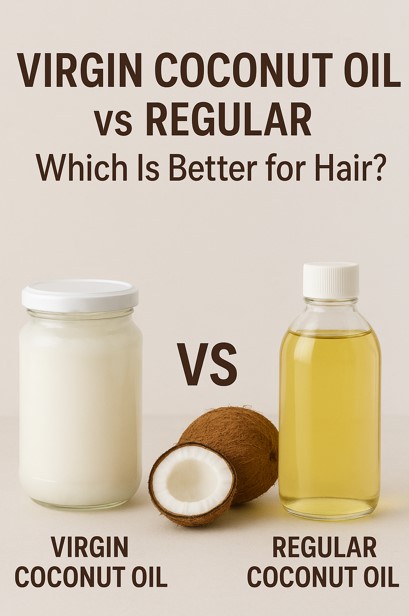
Virgin Coconut Oil vs. Regular Coconut Oil: Which One Is Better for Your Hair?
Have you ever stood in the haircare aisle, staring at two types of coconut oil—virgin and regular—and wondered, “What’s the difference? And which one should I use for my hair?” If you’re nodding your head, you’re not alone. Many of us want shinier, healthier locks, but when it comes to choosing the right oil, things can get a bit confusing.
In this blog post, we’ll break it all down: what sets virgin coconut oil apart from regular coconut oil, how each type affects your hair, and which one gives you the best bang for your buck (and beauty). So, grab a seat and let’s dive into the coconut oil showdown.
What Is the Difference Between Virgin and Regular Coconut Oil?
Let’s start with the basics.
Virgin coconut oil is made from fresh coconut meat without the use of high heat or added chemicals. This type of oil is usually made through cold-pressing, which means the nutrients stay intact.
Regular coconut oil—also known as refined or processed coconut oil—is made from dried coconut meat, also called copra. It goes through a refining process that often involves bleaching and deodorizing.
Here’s a quick breakdown:
- Virgin coconut oil: Unprocessed, cold-pressed, retains natural aroma and nutrients.
- Regular coconut oil: Refined, may be bleached and deodorized, loses some nutrients in processing.
Kind of like comparing fresh-squeezed orange juice to the stuff that comes from concentrate—one is more natural, while the other goes through more steps to get to your shelf.
Benefits of Virgin Coconut Oil for Hair
So, what makes virgin coconut oil the darling of the haircare world? It all comes down to its purity and nutrients.
1. Rich in Lauric Acid
Virgin coconut oil contains a high level of lauric acid, a type of fatty acid that easily penetrates the hair shaft. This helps strengthen your hair from the inside out.
2. Moisture Retention
One of the best things about virgin coconut oil is that it locks in moisture. If you have dry or frizzy hair, this is a game-changer.
3. Antimicrobial Properties
Thanks to its natural components, virgin coconut oil also helps fight dandruff and scalp infections. Think of it as both a conditioner and a scalp treatment.
4. No Chemical Additives
Because it’s not processed with chemicals or heat, virgin coconut oil is gentler on your hair and scalp.
5. Natural Shine and Softness
Want that glossy, soft finish? Virgin coconut oil adds a natural shine without leaving your hair feeling greasy.
Drawbacks of Regular (Refined) Coconut Oil
Now, refined coconut oil isn’t all bad—it still contains many of the same fatty acids. But due to the way it’s processed, it loses some of the key benefits.
- Fewer nutrients: High heat and chemical processing can strip away some of the antioxidants and beneficial compounds.
- No natural fragrance: If you love the tropical coconut scent, refined oil might disappoint you.
- More suitable for cooking than haircare: It’s great in the kitchen, but not necessarily the best choice for nourishing your scalp.
Still, if you’re not sensitive to products and just want a basic oil for occasional use, refined coconut oil is better than no oil at all.
Which Is Better for Hair? Virgin or Regular Coconut Oil?
Honestly, it depends on your hair goals.
- If you want deep nourishment and long-term benefits: Go with virgin coconut oil.
- If you just need a quick fix or are on a tight budget: Regular coconut oil can still help to some extent.
But overall, virgin coconut oil wins when it comes to hair health. It’s more natural, nutrient-rich, and effective in treating common hair issues like dryness, frizz, and breakage.
How to Use Virgin Coconut Oil for Best Results
You don’t need to drench your hair in oil to see results. A little goes a long way. Here’s how to make the most of it:
1. As a Pre-Wash Treatment
Apply it to dry hair 30 minutes before you shower. This helps reduce damage from shampooing.
2. Overnight Hair Mask
For deeper hydration, massage it into your roots and hair length, cover with a shower cap, and rinse in the morning.
3. Scalp Massage
Warm a spoonful and gently massage your scalp once a week. It’s relaxing and boosts blood circulation.
4. Frizz Control
Rub a tiny bit between your palms and run through the ends of your hair to tame flyaways.
Pro Tip: Always use a small amount and start at the ends—not the roots—unless you’re doing a scalp treatment.
My Personal Experience: Why I Switched to Virgin Coconut Oil
I used regular coconut oil for years and thought it was doing a decent job. But then I made the switch to virgin coconut oil—and wow, what a difference! My hair felt softer within a week and looked noticeably shinier. Even my friends asked what I was using.
What impressed me the most was the smell—pure coconut heaven—and the fact that my scalp didn’t feel weighed down. I’ve been using it weekly ever since.
What to Look for When Buying Virgin Coconut Oil
Not all coconut oils are created equal, even if they say “virgin” on the label. Here’s what to keep an eye out for:
- Cold-pressed: This means it’s made without heat, preserving nutrients.
- Organic: Fewer chemicals and pesticides, which is a plus.
- Unrefined: Look for this term to be sure it hasn’t been chemically altered.
- Glass jar packaging: Better for storage and prevents contamination over time.
Some trusted brands include Nutiva, Viva Naturals, and Garden of Life, but always read the label and reviews first.
Final Thoughts: Is Virgin Coconut Oil Worth It?
Absolutely. If your goal is to nurture your hair naturally—without synthetic additives—virgin coconut oil is a smart choice. It’s gentle, effective, and packed with hair-loving nutrients.
Sure, it might cost a bit more than the regular version, but when you think about the benefits—it’s totally worth it.
So, next time you’re debating which coconut oil to pick, ask yourself: Do I want a quick fix, or do I want to invest in long-term hair health?
Go with virgin. Your hair will thank you.
Have You Tried Virgin Coconut Oil on Your Hair?
We’d love to hear your experience! Did it work wonders? Or did you notice no difference? Drop a comment and let’s swap hair care stories.
And if you found this post helpful, don’t forget to share it with a friend who’s having a bad hair day. 😉
Happy oiling!
Leave a Reply