
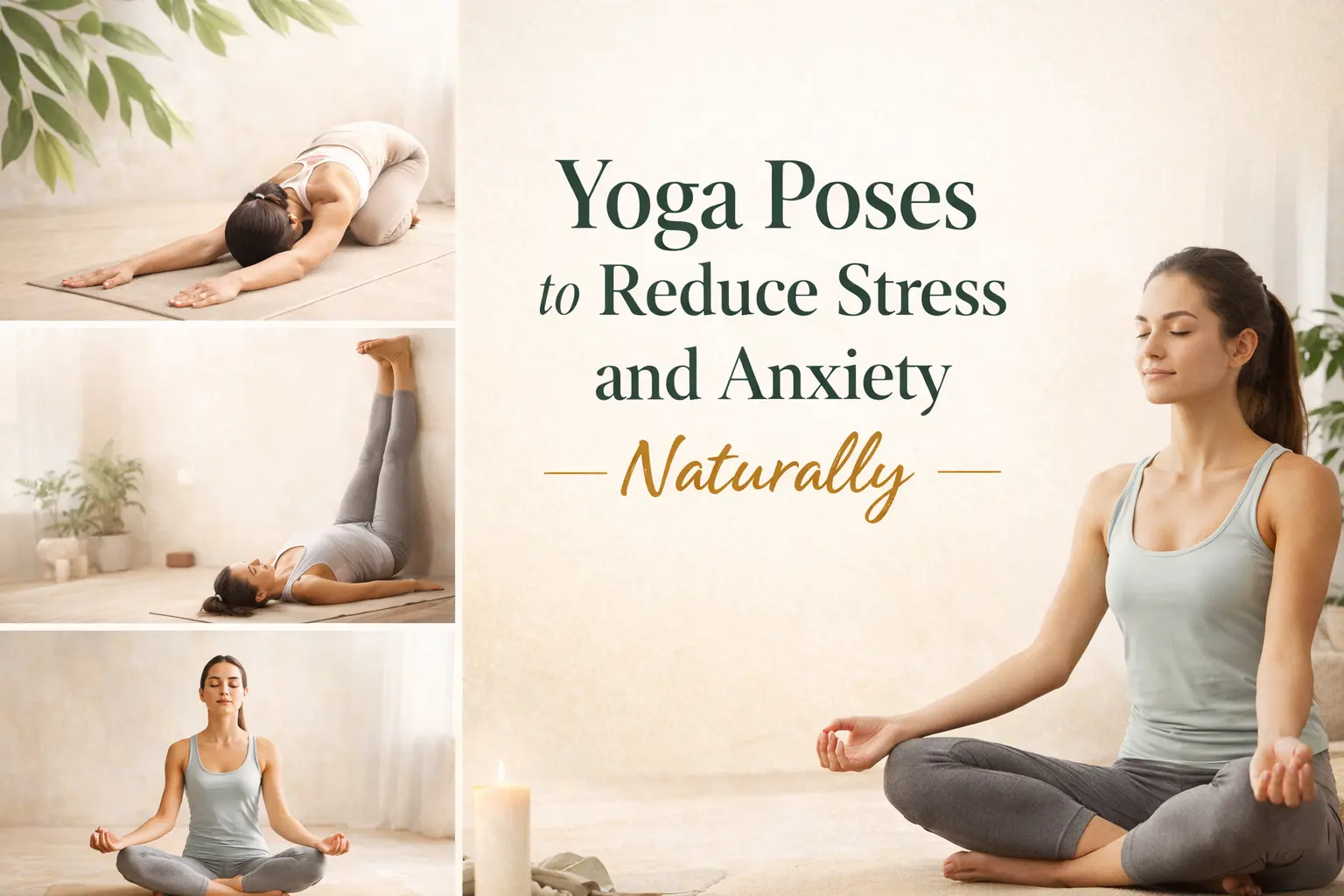
Life gets busy, and sometimes the stress quietly builds up without us even noticing. Between work, studies, family responsibilities, and spending too much time on phones and laptops, it’s easy to feel mentally tired and emotionally overwhelmed.
I’ve personally gone through phases where my mind felt constantly busy, especially after long hours of work, and that’s when I started trying simple yoga stretches and breathing exercises at home.
What surprised me most was how quickly even a short yoga session could help me feel calmer and more relaxed. It wasn’t about doing difficult poses perfectly — it was more about slowing down, breathing deeply, and giving my mind a break for a few minutes.
Over time, I noticed better sleep, less tension in my shoulders, and a more peaceful mindset during stressful days.
That’s why yoga has become such a popular natural way to reduce stress and anxiety. It not only helps stretch and relax the body but also calms the mind, lowers stress levels, and helps you feel more emotionally balanced.
The best part is that you don’t need to be an expert or super flexible to start. Even simple beginner-friendly yoga poses can make a noticeable difference in how you feel.
In this guide, we’ll explore some of the best yoga poses for stress and anxiety relief, along with beginner tips and personal insights to help you start comfortably at home
Why Yoga Helps Reduce Stress and Anxiety?
Stress triggers the release of cortisol, the stress hormone, which can:
- Increase blood pressure
- Disrupt sleep
- Cause tension and muscle tightness
- Lead to anxiety and mood swings
Yoga combines breath control, mindfulness, and physical movement to:
- Lower cortisol levels
- Activate the parasympathetic nervous system (the “rest and digest” mode)
- Release muscle tension
- Improve emotional balance
Even 10–20 minutes of yoga daily can make a noticeable difference in mood and stress levels.
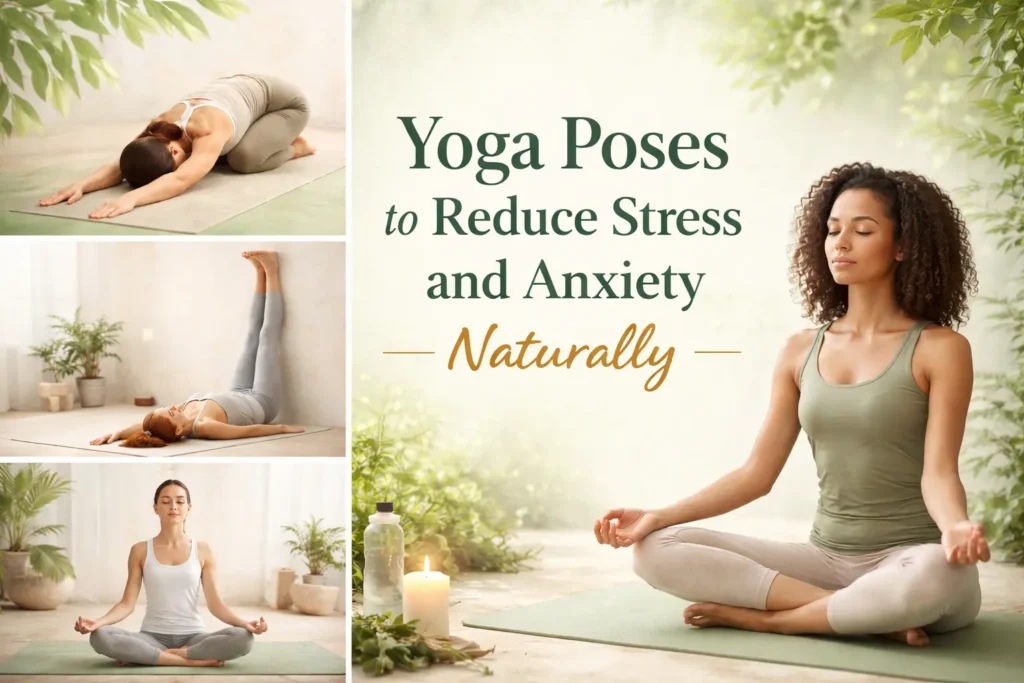
Tips Before You Start
- Create a calm space – Quiet room, mat, and comfortable clothes
- Use props if needed – Blocks, straps, or cushions
- Focus on breath – Inhale deeply through the nose, exhale fully through the mouth or nose
- Go at your own pace – It’s not about perfection, it’s about feeling better
Recommended Best Yoga Essentials for Stress Relief
OR
- Non-slip yoga mat for comfort and stability
- Yoga blocks & strap for beginners
- Meditation cushion for seated poses
Top Yoga Poses to Reduce Stress and Anxiety
Top Yoga Poses to Reduce Stress and Anxiety are described below.
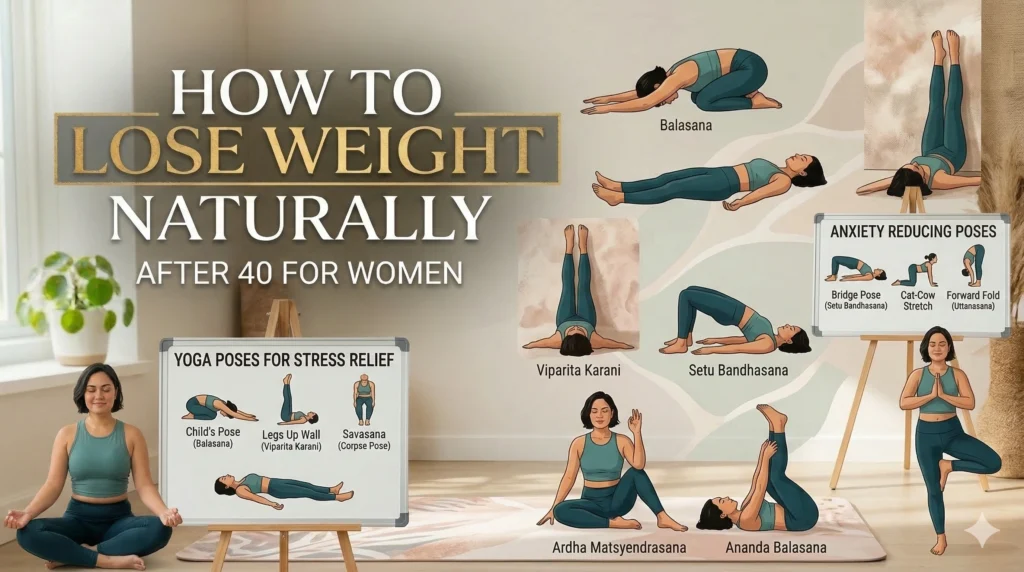
1. Child’s Pose (Balasana)
How to do it:
- Kneel on the floor, sit on your heels
- Fold forward, arms stretched in front or by your sides
- Rest forehead on the mat
Benefits:
- Calms the mind
- Gently stretches the back and hips
- Reduces fatigue and stress
Tip: Stay 1–3 minutes, breathing deeply. Focus on relaxing your shoulders and jaw.
2. Cat-Cow Pose (Marjaryasana-Bitilasana)
How to do it:
- Start on hands and knees
- Inhale, arch your back, lifting head and tailbone (Cow)
- Exhale, round your spine, tucking chin and tailbone (Cat)
Benefits:
- Releases tension in the spine
- Stimulates circulation
- Reduces anxiety by syncing breath with movement
Tip: Repeat 5–10 rounds slowly, coordinating breath with movement.
3. Standing Forward Bend (Uttanasana)
How to do it:
- Stand with feet hip-width apart
- Hinge at hips, fold forward, letting your head hang
- Slightly bend knees if needed
Benefits:
- Calms the nervous system
- Relieves tension in neck, shoulders, and back
- Encourages introspection and relaxation
Tip: Stay 30–60 seconds, gently swaying side to side if comfortable.
4. Legs-Up-The-Wall Pose (Viparita Karani)
How to do it:
- Sit sideways next to a wall
- Lie back, swing legs up against the wall
- Relax arms by your sides
Benefits:
- Reduces fatigue and stress
- Improves circulation
- Helps with mild anxiety and insomnia
Tip: Stay 5–10 minutes, breathing slowly and deeply.
5. Seated Forward Bend (Paschimottanasana)
How to do it:
- Sit with legs extended
- Inhale, reach arms overhead
- Exhale, fold forward, reaching for your feet or shins
Benefits:
- Calms the mind and relieves anxiety
- Stretches spine and hamstrings
- Promotes introspection
Tip: Keep your spine long; don’t force yourself to touch feet. Breathe deeply.
6. Bridge Pose (Setu Bandhasana)
How to do it:
- Lie on your back, knees bent, feet hip-width apart
- Press feet into the floor, lift hips
- Clasp hands under your back if comfortable
Benefits:
- Opens chest and shoulders
- Stimulates the thyroid, helping regulate stress hormones
- Reduces mild depression and anxiety
Tip: Hold 20–30 seconds, repeat 2–3 times, exhaling slowly.
7. Corpse Pose (Savasana)
How to do it:
- Lie flat on your back, legs slightly apart
- Arms by your sides, palms facing up
- Close eyes, focus on breathing
Benefits:
- Deeply relaxes the body and mind
- Reduces cortisol levels
- Enhances mental clarity and calmness
Tip: Practice for 5–10 minutes at the end of your session.
8. Warrior II Pose (Virabhadrasana II)
How to do it:
- Stand with legs wide apart
- Turn right foot out, left foot slightly in
- Bend right knee, stretch arms out to sides, gaze over right hand
Benefits:
- Strengthens legs and core
- Builds mental focus and confidence
- Helps release tension and anxiety
Tip: Hold 20–30 seconds on each side, focusing on steady breathing.
9. Alternate Nostril Breathing (Nadi Shodhana)
How to do it:
- Sit comfortably
- Close right nostril with thumb, inhale through left
- Close left nostril with ring finger, exhale through right
- Repeat, alternating sides
Benefits:
- Balances nervous system
- Reduces stress and anxiety
- Promotes mental clarity
Tip: Practice 5–10 minutes daily, focusing on slow, controlled breaths.
10. Happy Baby Pose (Ananda Balasana)
How to do it:
- Lie on back
- Grab the outer edges of your feet, knees bent toward armpits
- Rock gently side to side
Benefits:
- Opens hips and lower back
- Relieves tension and stress
- Encourages relaxation and mindfulness
Tip: Hold 1–2 minutes, breathing deeply and releasing any tension in the hips.
Tips for Maximum Stress Relief Through Yoga
- Consistency Matters – Even 10 minutes daily is better than occasional long sessions
- Focus on Breath – Deep, slow breathing amplifies relaxation
- Combine with Meditation – A few minutes of mindfulness after poses enhances effects
- Listen to Your Body – Avoid forcing poses; comfort is more important than perfection
- Practice Before Bed – Evening yoga can improve sleep quality and reduce anxiety
Why Yoga Works Better Than Just Exercise
- Traditional exercise helps burn calories but may not calm the mind
- Yoga integrates physical movement, breathing, and mindfulness
- Reduces cortisol levels and stimulates the parasympathetic nervous system
- Supports both mental and physical well-being
Note- If stress and anxiety are part of your daily routine, having the right yoga tools at home makes it easier to stay consistent and relaxed.
Yoga starter kit is essential to start !
You don’t need expensive equipment — just a few simple basics can make a big difference. A good non-slip yoga mat provides comfort and stability, while comfortable clothing helps you move freely during different poses. Many beginners also find yoga blocks and straps helpful for improving flexibility and maintaining proper posture safely.
From personal experience, having a simple setup at home makes it much easier to stay motivated and practice regularly. Even keeping your yoga mat rolled out in a quiet corner can encourage you to take a few minutes each day to stretch, relax, and clear your mind.
Conclusion
Yoga has honestly become one of the simplest ways I’ve found to manage stress naturally. During busy or overwhelming days, even a short session helps me slow down, clear my mind, and feel more relaxed both mentally and physically. It’s not about being perfect at the poses — it’s about giving yourself a few quiet moments to breathe and reset.
With regular practice, yoga can help:
- Calm a racing mind
- Reduce stress and tension in the body
- Improve sleep quality
- Boost mood and focus
- Help you feel more balanced and grounded throughout the day
One thing I personally like about yoga is that you don’t need hours of practice to feel the benefits. Even 15–20 minutes a day can make a noticeable difference over time. Starting with simple beginner-friendly poses and staying consistent is often more helpful than trying advanced routines too quickly.
If you’re feeling stressed or anxious lately, try adding a few gentle yoga poses to your daily routine. Sometimes, small habits like this can have a bigger impact than we expect.
Leave a Reply